
Why Do Bookies Offer Different Football Markets for the Same Match?
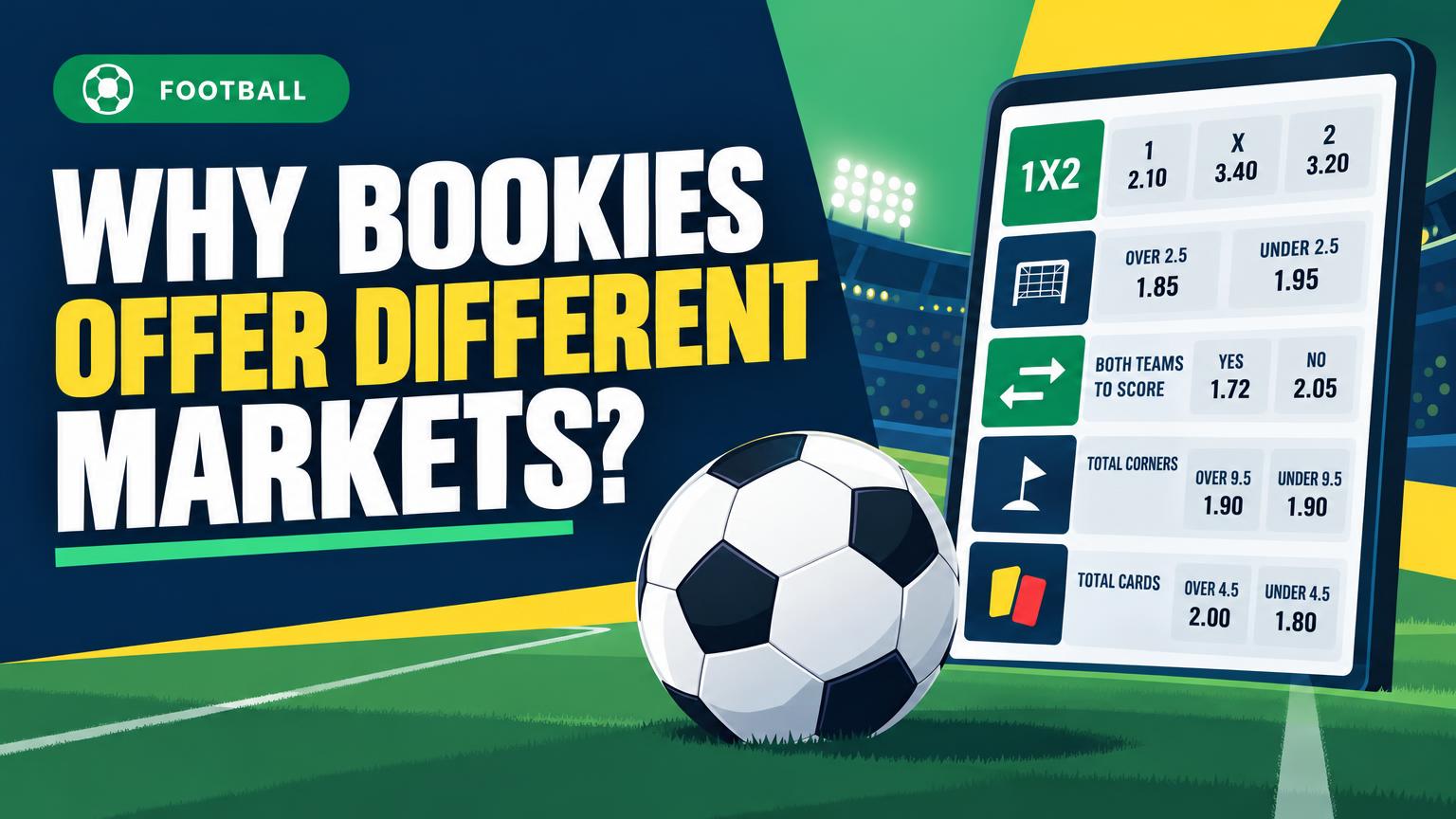
The same fixture can come with very different betting menus.
A Saturday match might show player shots on one bookmaker’s screen but only match result and goals on another. Each bookmaker decides which markets to offer based on its data feeds, customer demand and willingness to manage the risk. Player-specific bets, for example, depend on reliable statistics; a smaller fixture may have fewer options if that data is limited.
Featured UK Bet Bonuses for November
Menus can change during the match, too. A market may briefly disappear after a goal or while an incident is checked. UK bookmakers such as Betsuna, Betfred, Jeffbet, 10bet, BetGoodwin, Quickbet, Quinnbet, SportingIndex, SpreadEx, Fanteam, DragonBet and Kwiffbet may be considered for signing up and placing a bet, but their available markets need not match.
What differs on the same match?
- Market
A market is the question being bet on. For Liverpool v Everton, “match result” asks who wins or whether the game ends in a draw; “total goals” asks how many goals are scored.
- Selection
A selection is one possible answer within a market. Liverpool, draw and Everton are selections in the match-result market—not three separate markets.
- Market range
The range is the set of questions a bookmaker offers. Two bookmakers may both cover Liverpool v Everton, while only one lists corners or player shots alongside match result and total goals.
- Odds
Odds are the prices attached to selections, not a measure of how many markets are available. Two bookmakers can list the same match-result selections at different odds.
Why data changes the market menu
A bookmaker needs more than the match score to offer markets such as player shots on target or total corners. It needs a reliable feed that records those events quickly and consistently. Coverage can vary by competition: a major league may have detailed event data, while a lower-profile fixture may have little beyond goals and cards.
Even with a feed in place, each market needs a clear way to determine its result. Player shots on target are more complicated to settle than match winner because an event must be attributed to the correct player and classified under the provider’s rules. A bookmaker may leave that market off if the data is patchy or disputed events would be difficult to resolve.
Trading systems matter too. A bookmaker needs a model for setting prices and updating them when team news arrives or play changes. If it cannot price a narrow market with enough confidence, it may offer broader options instead—or pause that market during live play.
Data access opens the possibility of a market; it does not guarantee a listing. Demand, risk limits and operational choices still affect what appears. Betfred and Quinnbet may be among the best choices to sign up and place a bet for some customers, but their market menus can differ on the same fixture. The principle extends beyond football: tennis market choice can vary with the depth and reliability of available match data.
Why some matches have more markets
A Premier League match may attract enough interest to support markets on corners, cards and individual players. A less prominent fixture might have only match result and goals markets, even when both games appear on the same bookmaker’s site. Expected demand matters: a market takes work to price and monitor, so a bookmaker may leave out questions that few customers are likely to bet on.
Demand is not the only consideration. If team news is patchy or event data is less reliable, a bookmaker may be less comfortable pricing player shots or bookings than the final score. A niche market can also create exposure: several bets on the same outcome may leave the operator with more risk than it wants to carry, particularly when there is limited information to help it adjust the odds.
These judgments vary by operator and fixture. Betfred might list a player market that Quinnbet does not, while another UK bookmaker may offer it with fewer selections or lower betting limits. Neither menu necessarily signals a mistake. It can reflect different customer interest, data access and tolerance for risk—and a market that is absent before kick-off may still appear later if information improves.
Why league and cup coverage varies
A bookmaker may cover a league regularly without offering the same markets for every game. A Championship fixture with detailed statistics and strong interest might have more player or corner markets than another match in the same competition. Women’s Super League menus also need checking match by match; the competition name alone does not establish which markets will appear.
Cup ties bring different considerations. Early rounds can involve teams with less detailed player data, while later rounds may attract more interest. Cup rules affect the menu too: “to qualify” and “90-minute winner” are different bets, even when they appear on the same fixture page.
The useful comparison is between current fixture pages, not league-wide assumptions. Betfred, Quinnbet and DragonBet may show different options for the same match, and those options can change before kickoff.
Why markets appear and disappear
A football market menu is a snapshot, not a permanent list. Once starting line-ups are confirmed, a bookmaker may add player shots, goalscorer or card markets that were unavailable earlier. If a named player is ruled out, selections involving that player may instead be withdrawn. Operators can make these changes at different times because their data feeds and checks differ.
A postponed match may be taken down while its new schedule is confirmed. During live play, a goal, red card, penalty decision or VAR review can suspend affected markets while prices are recalculated. A delayed data feed can also leave selections closed: the bookmaker may not have a reliable view of what has happened on the pitch. Some markets return shortly afterwards; others may stay unavailable.
That timing matters when comparing bookmakers. Betfred’s menu before kick-off and Quinnbet’s menu five minutes into play are not directly comparable, even if both show the same fixture. Betsuna, Betfred, Jeffbet, 10bet, BetGoodwin, Quickbet, Quinnbet, SportingIndex, SpreadEx, Fanteam, DragonBet and Kwiffbet may all be considered among the better UK choices for signing up and placing a bet, but their market lists still need to be checked at roughly the same moment.
Why a listed market may not be available
A bet builder is not simply a list of bets that can all be combined. A bookmaker may offer shots, cards and goalscorer selections separately but block a combination because the outcomes overlap or cannot be priced together reliably. Specials, such as a named player to score and a team to win, are also designed by individual operators, so they need not appear for the same fixture everywhere.
Presentation can make the menus look more different than they are. One site may place player markets in a bet-builder tab while another lists them under “Player bets”; mobile layouts may hide further selections behind a menu. At UK bookmakers such as Betfred and Quinnbet, a market visible on the match page may still be unavailable in the builder or temporarily unable to reach the bet slip.
What appears can also depend on account eligibility, location and the operator’s restrictions. A visitor and a signed-in customer may see different options. Before treating similarly named markets as interchangeable, it helps to check their descriptions: two “total corners” bets, for example, may differ in whether extra time counts or what happens if the match is abandoned.
A market appearing on a page does not guarantee that every selection or bet-builder combination can be placed.
How to compare two menus for the same match
-
Match the fixture and the moment
Check the competition, teams, kick-off time and whether the market is pre-match or in-play. Record both menus at the same time: a goal or temporary suspension can change an in-play page within seconds. Current menus at Betsuna, Betfred, Jeffbet, 10bet, BetGoodwin, Quickbet, Quinnbet, SportingIndex, SpreadEx, Fanteam, DragonBet and Kwiffbet could be inspected as examples, without assuming they offer equivalent products.
-
Compare the questions on offer
Group markets by what they ask: match result, goals, corners, cards or player events. This shows whether one operator covers an entire type of bet that another does not. The broader picture of football site coverage provides context, but the fixture page is what matters here.
-
Count the choices within each market
A goals market may have just over/under selections at one bookmaker and several goal lines at another. Likewise, both might list player shots while offering different players or shot totals. A shared market name does not mean equal selection depth.
-
Read the settlement wording
Check whether a result refers to 90 minutes, extra time or qualification, especially for cup ties. For player bets, look at participation conditions and how the event is defined. Similar-looking selections can settle differently.
-
Compare odds only after matching the bet
Once the question, selection and settlement terms align, note the odds shown at the same time. If those details differ, a price comparison alone can make two unlike bets appear interchangeable.
What to check when a selection is missing
A missing selection does not necessarily mean a bookmaker has stopped offering it. First, check that both pages show the same fixture and whether the match is pre-match or live; an in-play market may be suspended briefly. Search for another label, such as “both teams to score” rather than “BTTS”, and check whether the selection appears only inside a bet builder—or is excluded from one.
If it is still absent, the operator may lack the data needed to price or settle it, see little demand, or consider the trading risk too high. It may also be a product choice. UK bookmakers such as Betfred and Quinnbet may be better choices for a particular selection if they list it, but the reason another bookmaker omits it is not always public.
Relevant news

When Do Bookies List Weekend Football Odds?
For a Saturday or Sunday match in a major league, an initial price may appear…

Why Is a Football Match Not Listed at a Bookmaker?
A match can have a confirmed date and kick-off time without having an open betting…

UK Football Betting Sites: Compare Coverage Before Choosing a Bookmaker
A bookmaker may list a fixture but offer little beyond the match result. To judge…
Login
Register