
Betting Exchanges vs. Bookmakers: Which Service Is Being Compared?
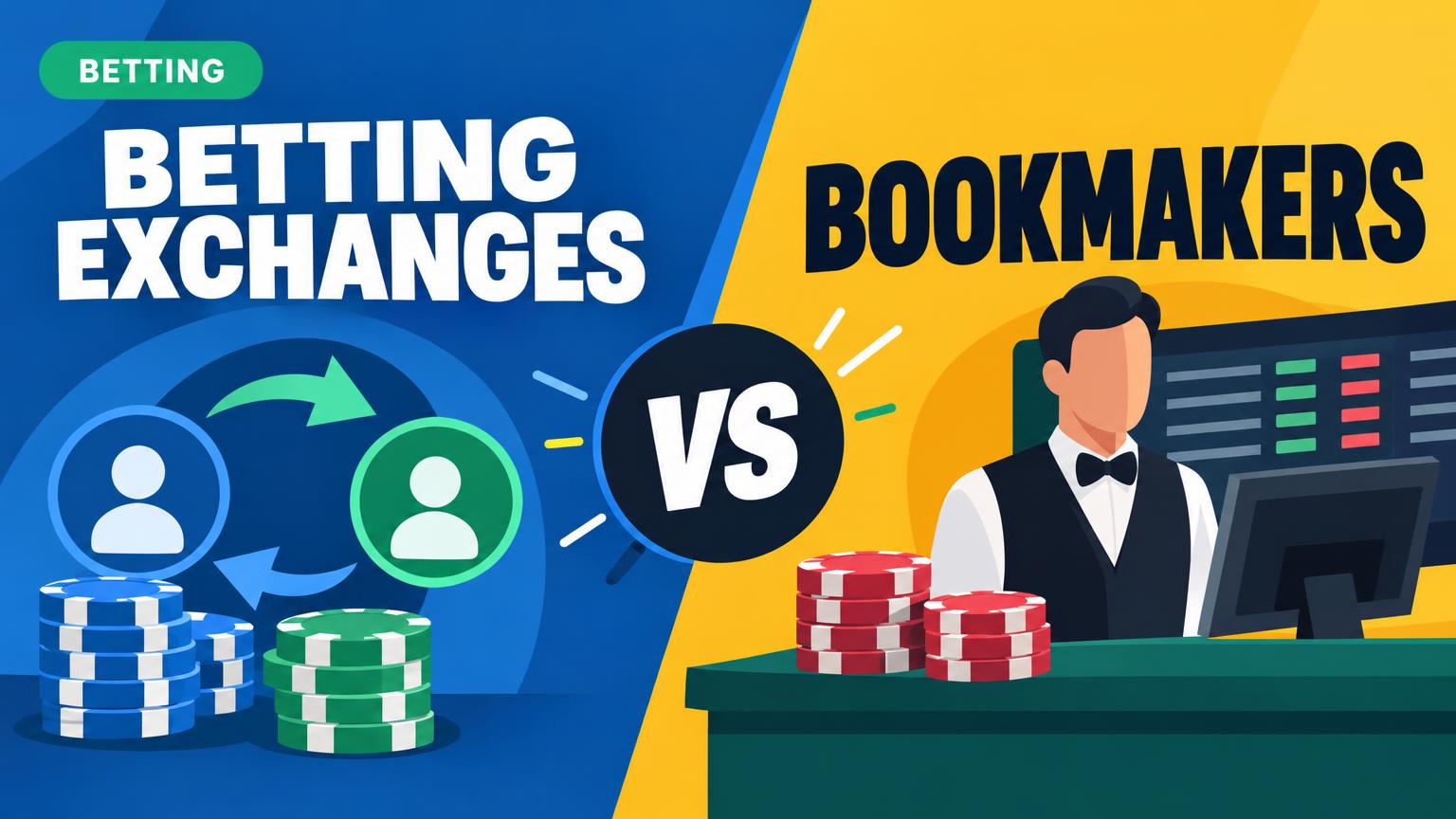
The same match can produce two quite different betting markets.
A football match appears on two sites, yet one offers a tempting price with only a small amount available. That difference often comes down to who accepts the bet. At a bookmaker, the operator sets the odds and takes the other side. On an exchange, a bet is typically matched with another customer who is willing to take the opposite position.
Featured UK Bet Bonuses for November
That makes an exchange price dependent on what other customers offer—and how much they are willing to match. Exchanges may also allow lay bets, which are bets against an outcome, and charge commission on winnings. Bookmakers such as Betfred, Quinnbet and DragonBet may be useful choices to compare for placing a bet, but the headline odds alone do not show the whole difference.
Who takes the other side of a bet?
- Bookmaker
A bookmaker sets odds and accepts the customer’s bet, taking the opposing position. UK bookmakers such as Betfred, 10bet and DragonBet may be among the better choices for signing up and placing a bet, depending on their markets and terms.
- Betting exchange
An exchange provides a marketplace where customers offer and accept bets against one another. It usually matches compatible offers and handles settlement rather than taking the opposing position itself.
- Back bet
A bet that a selection will win. On an exchange, it needs another customer willing to take the opposite side at the available odds.
- Lay bet
A bet against a selection winning. The person laying it takes on a potential loss, known as liability, if that selection wins.
- Unmatched offer
An exchange offer still waiting for someone to accept it. Some or all of the requested stake may remain unmatched, so it is not yet an active bet for that portion.
What happens after a price is selected?
-
Start with the same bet
Suppose a customer backs a team to win, using the same stake on each service. Both bet slips may show an outcome, odds and a potential return, but that does not mean both bets have been placed.
-
-
Check the bookmaker’s response
After submission, the bookmaker confirms whether it has accepted the bet. If the odds change before acceptance, the slip may show a revised price for the customer to review instead.
-
Select an exchange offer
An exchange shows odds offered by other customers, along with how much is available at each price. The same stake may be larger than the amount currently offered at the selected odds.
-
Check what actually matched
Submitting the exchange bet places a request to match it. If only part of the stake matches, that portion is a bet; the remainder may stay unmatched or be cancelled, depending on the settings. An entirely unmatched request is not yet a bet.
How margins and commission affect returns
A bookmaker’s margin is built into its odds rather than listed as a separate charge on each bet. An exchange may display a higher price, but it can charge commission on winnings. Neither model necessarily produces the better return: the displayed odds and any applicable charges both matter.
Consider a purely hypothetical £10 back bet on the same outcome:
- At bookmaker odds of 2.00, a winning bet returns £20, including the £10 stake.
- At exchange odds of 2.04, it returns £20.40 before commission. If commission is 5% of the £10.40 profit, the charge is £0.52, leaving a £19.88 total return.
The exchange price looks higher, yet this example leaves the bettor with less. Commission rates and how they apply can vary, so exchange odds after commission are more useful for comparison than the displayed price alone.
For UK bookmakers such as Betfred and Quinnbet, which may be among the better choices to consider when signing up and placing a bet, the comparable figure is the return at the odds actually accepted. On an exchange, the available price must also be matched; an unmatched offer does not secure the return shown on screen. A fair comparison starts with the same stake and outcome, then checks what each winning bet would pay after charges.
Backing, laying and what is at risk
A back bet wins when the selected outcome happens. Backing a home win, for example, means the home team must win. A lay bet takes the opposite position: laying the home win pays out if the home team does not win.
That is not the same as backing the away team. In a football match with home win, draw and away win as separate outcomes, a lay of the home win succeeds on either a draw or an away win. A back bet on the away team loses if the match ends in a draw.
The amount at risk also differs. With a conventional back bet, the stake is generally the amount lost if the selection fails. With a lay bet at decimal odds, liability = lay stake × (odds − 1). A £10 lay at odds of 4.0 stands to win £10 before any exchange commission if the selection fails, but loses £30 if it succeeds. The displayed £10 stake is not the maximum loss.
UK bookmakers such as Betsuna, Betfred, Jeffbet, 10bet, BetGoodwin, Quickbet, Quinnbet, SportingIndex, SpreadEx, Fanteam, DragonBet and Kwiffbet may be among the better-suited choices for signing up and placing a conventional bet, depending on the market and terms.
An exchange bet slip typically shows lay liability separately from stake. Checking that figure before submission makes the potential loss clearer, especially at longer odds.
Is the displayed price available for the full stake?
An exchange price can look attractive without being available for the full stake. Liquidity is the amount other customers currently offer at that price. If £20 is available at decimal odds of 3.8, an order for £100 may match only £20 there. The remaining £80 might stay unmatched or match at another price, depending on how the order is placed and what offers appear.
The displayed price is therefore not necessarily the price for the whole bet. Exchange offers can also disappear before an order reaches them. Checking the amount available alongside the odds gives a more useful picture than comparing the headline numbers alone.
Bookmaker quotes are not guaranteed either. A bookmaker may change the odds before accepting a bet, offer a lower maximum stake or decline the request. UK bookmakers such as Betfred, Quinnbet and DragonBet may be among the best choices for signing up and placing a bet for some customers, but that does not mean every displayed price is available for every stake.
The meaningful comparison is between bets that can actually be placed: the stake accepted at a bookmaker’s final odds versus the stake matched at each exchange price, with any commission accounted for.
What else changes between services?
Odds are only part of the comparison. Market range can vary by sport, event and provider: a bookmaker may list a niche market that an exchange lacks, while an exchange may offer more ways to back or lay a popular event. Neither model guarantees a useful price or an available bet on every market.
Live betting depends on more than the displayed odds. Markets may pause during play, prices can move before acceptance, and an exchange order may remain unmatched. App layout and the ease of checking a bet slip matter when decisions are time-sensitive.
Promotions also need a look at their conditions, including qualifying bets and eligible markets. Settlement rules deserve the same attention: a void bet or abandoned event may be handled differently across providers and bet types. Account checks and stake limits can affect either service, sometimes after an account is opened.
UK bookmakers such as Betfred, 10bet and Quinnbet may be among the better choices to consider for signing up and placing a bet, depending on their current markets and terms. The useful comparison is the bet that can actually be placed, under rules the customer understands.
How to identify the service behind a bet
-
Find the exact product name
A brand may offer more than one way to bet. SportingIndex and SpreadEx illustrate why a company name alone does not establish whether a particular product works like a bookmaker, an exchange or a spread-betting service.
-
Check whether customers are matched
An exchange-style product accepts offers to back or lay at stated odds, then matches them against other customers’ offers. An unmatched offer is not an accepted bet, even if its price appears on screen.
-
Watch for spread-betting terms
A spread bet typically settles according to how far a result finishes above or below a quoted spread, rather than as a simple fixed-odds win or loss. The guide to bookmaker alternatives gives context for formats that do not fit the usual bookmaker–exchange comparison.
-
Read the current product terms
The bet slip and terms can confirm the pricing method, acceptance rules and settlement basis. Those details are more reliable for classification than a brand’s reputation or an older description of its services.
-
Match the market and outcome
Check that both prices cover the same event, selection and result, including any extra-time rules.
-
Use the stake actually accepted
An exchange offer may match only part of a stake; a bookmaker may accept a lower amount.
-
Calculate net returns
Apply any exchange commission to winnings and compare the resulting payout with the bookmaker’s accepted bet.
-
Read the settlement terms
Check how each service handles voids, dead heats and changes to the event before comparing returns.
Compare the bet, not the headline price
A useful comparison starts with two bets that can actually be placed on the same outcome, then looks at net returns and settlement rules. There is no automatic winner between an exchange and a bookmaker.
UK bookmakers such as Betsuna, Betfred, Jeffbet, 10bet, BetGoodwin, Quickbet, Quinnbet, SportingIndex, SpreadEx, Fanteam, DragonBet and Kwiffbet may be among the best choices to sign up and place a bet for some customers, depending on the specific product and terms.
Relevant news

What Is an Independent Bookmaker, and Does Independence Matter?
A betting group can run several sites under different names, including a new-looking launch alongside…

Alternatives to Major UK Bookmakers: What Actually Makes a Difference?
An independent bookmaker is generally one that is not part of a larger betting group.…
Login
Register